HubSpot INBOUND 2025: Welcome to the AI-First Marketing Era

By Rob Bynder

For the first time, INBOUND took place at San Francisco’s Moscone Center, bringing together over 13,000 marketing, sales, and customer success professionals for three days of insights that could redefine business growth. As a design and marketing professional with over 30 years of experience in digital transformation, and a HubSpot agency partner since 2017, I left the conference feeling that HubSpot is undergoing its most significant transformation yet, signaling the start of a new era.

Here’s your executive summary of the future.
Loop marketing

The Great Marketing Reset

CEO Yamini Rangan delivered the harsh truth: traditional inbound marketing is having its going the way of MySpace. Organic traffic as we’ve known it is dying, and traditional inbound marketing strategies are losing their effectiveness in an AI-mediated world.

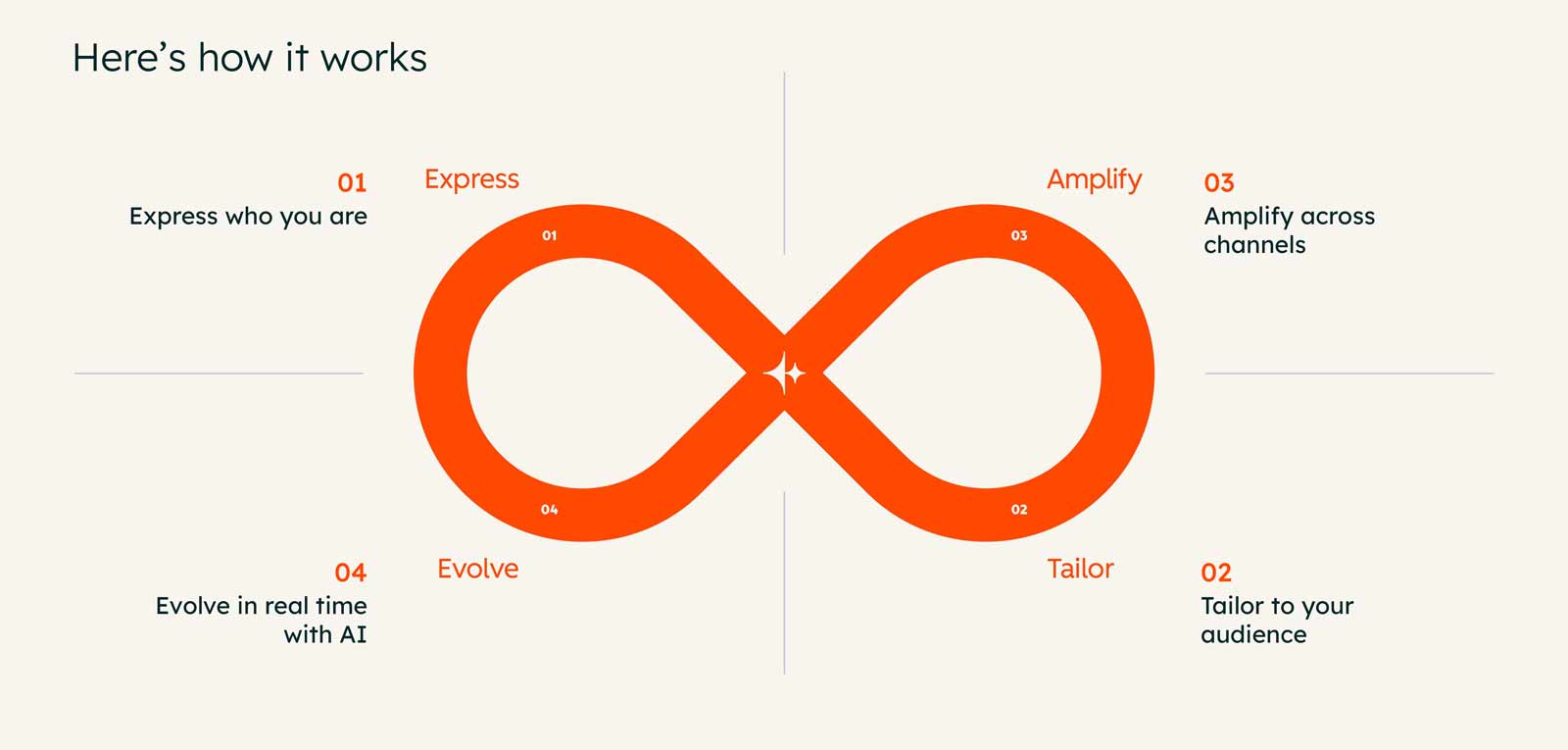
Enter “The Loop“: HubSpot’s evolution beyond inbound marketing. It’s a continuous growth cycle methodology designed for hybrid human-AI teams:

  • Express: Say something worth hearing
  • Tailor: Make it personal (actually personal, not “Dear [First Name]” personal)
  • Amplify: Be everywhere your customers are
  • Evolve: Adapt faster than your competitors can say “pivot”

This represents the most significant shift in growth methodology since HubSpot first coined “inbound marketing” over a decade ago.
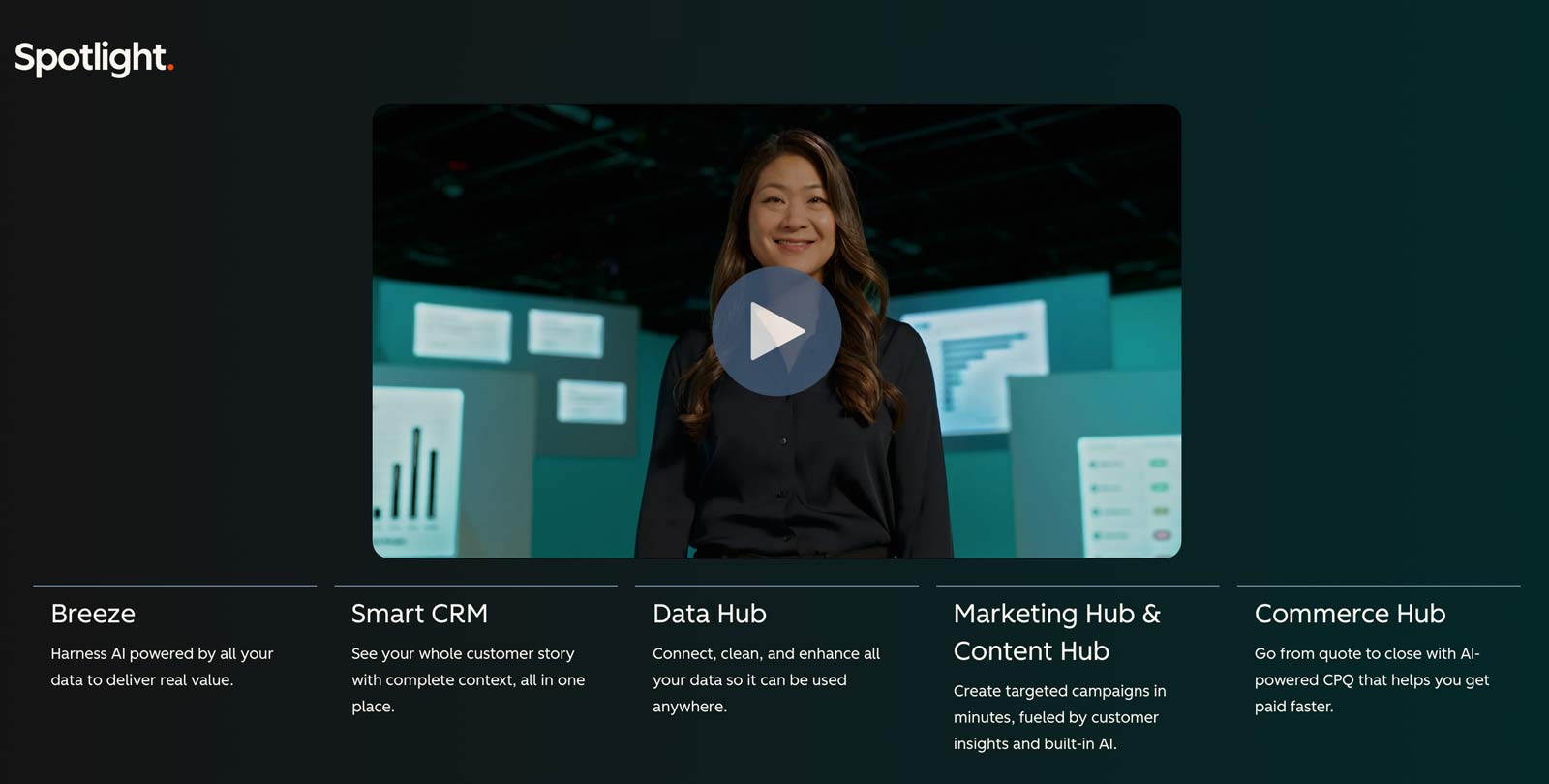
HubSpot 2025 Fall Spotlight

200+ Updates That Actually Matter

The HubSpot Fall 2025 Spotlight introduced over 200 product updates, the largest release in the company’s history. Three announcements stand out as game-changers for growth-focused organizations:
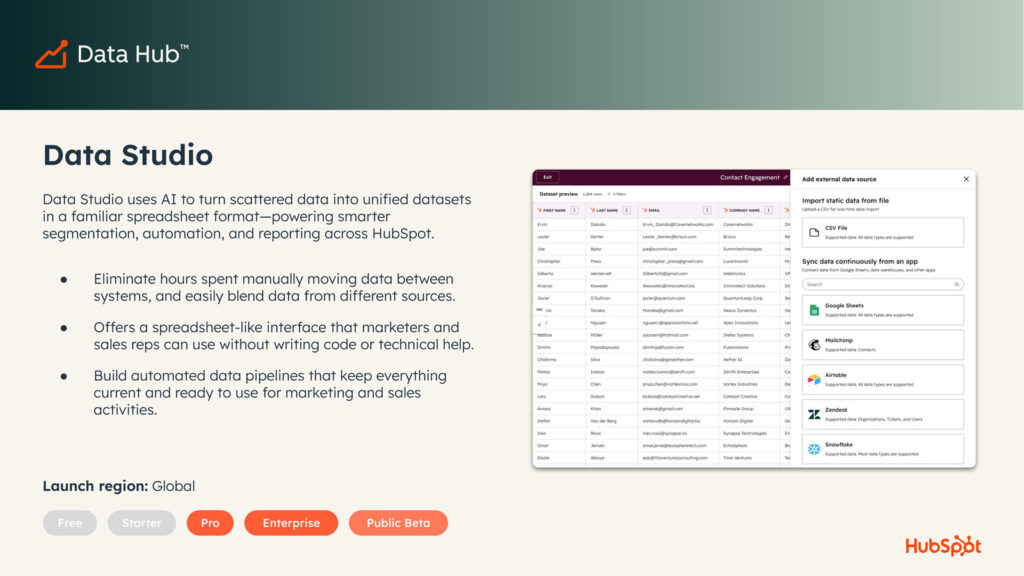
data hub

Data Hub: Your Crystal Ball, But Real

Most businesses make critical decisions with only 20% of their available data. The rest sits trapped in silos, scattered across systems, or buried in unstructured formats like call transcripts and email conversations.

HubSpot’s new Data Hub addresses this challenge directly by consolidating structured, unstructured, and external data sources into a single, unified foundation. Key capabilities include:

  • Data Studio: Connects to warehouses, apps, and files while suggesting data relationships
  • Data Quality: Automates de-duplication, standardization, and gap-filling
  • Smart CRM enhancements: Flexible views, conversational enrichment, and AI-surfaced insights

For businesses struggling with fragmented customer data, this represents a massive competitive advantage. When your AI systems have complete context about customer interactions, they can deliver truly personalized experiences at scale.
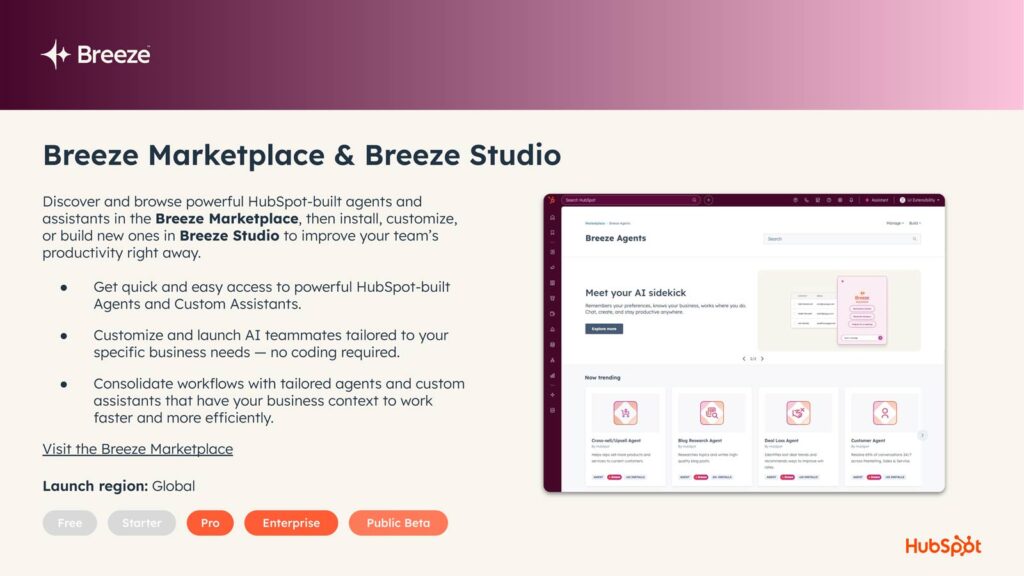
hubspot breeze

Breeze Agents: Your New AI Workforce

Eighteen new AI agents that don’t just give advice, they do the work. The standouts:

  • Data Agent: Answers complex customer questions instantly (like having a research team that never sleeps)
  • Customer Agent: Resolves half your support tickets automatically (your support team will send thank-you cards)
  • Prospecting Agent: A 24/7 BDR that never gets tired of rejection

These aren’t chatbots—they’re digital employees with access to your entire business context.

hubspot smart crm

Smart CRM: Like a Bespoke Suit for Your Business

HubSpot’s new Smart CRM redefines customer relationship management by integrating cutting-edge AI capabilities designed to streamline business operations and elevate customer experiences.

  • Flexible CRM Views: See your customer data the way your business works to more easily spot trends and act fast.
  • Self-Generating CRM Data: Automatically enriches contact and company records with HubSpot’s proprietary data, AI-driven smart properties, and insights pulled straight from your team’s conversations.
  • Smart Insights: Proactively analyzes CRM data and identifies what’s important, what’s changed, and what to do next.

What This Means for Your Business

The implications of INBOUND 2025 extend far beyond HubSpot users. Here’s how smart business leaders should be thinking about these developments:

1. AI Is Infrastructure, Not a Side Project

The companies that succeed won’t be those with the most AI tools, but those with the smartest hybrid teams where AI multiplies human impact rather than replacing it.

2. Data Unity Is Your Competitive Moat

The businesses thriving in 2025 and beyond will be those that can activate all their customer data, not just the 20% that’s easily accessible. If your organization is still operating with data silos, you’re essentially fighting with one arm tied behind your back.

3. Customer Experience Becomes Conversational

The shift toward AI-mediated buyer journeys means customers increasingly expect conversational, personalized interactions rather than traditional funnel-based experiences. Businesses need to meet customers where they are, with the right message, at the right time, through the right channel.

4. Marketing and Sales Alignment Is Critical

With AI agents handling more routine tasks, human team members can focus on strategy, creativity, and complex relationship building. But this only works when marketing and sales operate from the same data foundation and shared objectives.

The Bottom Line

Exploring the conference with Nick Carlson from Secret Source, we were both struck by how lucky we are for this opportunity to experience such a massive evolution in business, marketing, and communications firsthand. Having experienced the invention of desktop publishing, the rise of the internet, the emergence of social media, and now the rapid growth of AI and automation, it’s clear that innovation is accelerating at an unprecedented pace.

INBOUND 2025 made one thing clear: the businesses that master hybrid human-AI operations will create significant competitive advantages over those that treat AI as an afterthought.

HubSpot’s massive product release provides a glimpse into what’s possible when AI is deeply integrated into every aspect of the customer experience. But tools alone won’t drive success. You need strategy, data discipline, and a commitment to continuous learning.

The Loop isn’t just HubSpot’s new growth playbook. It’s a preview of how all successful businesses will operate in the AI-first era. The question isn’t whether this transformation will happen, but whether your business will adapt and gain a competitive edge.

Colin Jost at Inbound 2025

Plus, Colin Jost killed it in a much-needed break from work with an inspiring and hilarious set about overcoming self-doubt and trusting our ideas to become successful.


CRM Martech Bottom Line: HubSpot vs Klaviyo

Choosing the right CRM is crucial for businesses looking to improve their marketing, sales, and customer engagement strategies. With numerous options available, HubSpot and Klaviyo stand out as two popular choices that cater to different business needs. Here we provide a professional and detailed comparison of these platforms, highlighting their key features, benefits, and suitability for various use cases. By understanding their differences and strengths, you can make an informed decision about which platform best supports your business goals.

Platform Focus & Positioning

HubSpot is positioned as an all-in-one customer platform with integrated CRM, offering a comprehensive suite spanning marketing, sales, service, content management, and operations. It’s designed as a unified solution for managing the entire customer journey.

Klaviyo is a specialized email and SMS marketing platform built specifically for ecommerce businesses. It describes itself as “the first and only B2C CRM that helps you build deeper connections with your customers and drive lifetime value” with deep ecommerce integrations and data analytics.

Core Features Comparison

Email Marketing

  • HubSpot: Available across all plans
  • Klaviyo: Core strength with advanced automation and segmentation

SMS Marketing

  • HubSpot: Offers SMS marketing as part of its advanced Marketing Hub packages
  • Klaviyo: Provides robust SMS marketing features with seamless ecommerce integration

Automation

  • HubSpot: Comprehensive workflow automation
  • Klaviyo: Advanced ecommerce-focused automation

CRM Integration

  • HubSpot: ✓ Traditional all-in-one business platform with CRM at the center, designed for B2B and B2C use cases
  • Klaviyo: ✓ Specialized B2C CRM built specifically for consumer brands, with an embedded customer data platform and a focus on ecommerce marketing and service

Advanced Features

Where HubSpot Leads

  • Landing Pages, Website Builder, Blog Generator
  • Social Media Management, Ad Management
  • Lead Scoring, ABM Tools, Site Chat
  • Multi-Touch Revenue Attribution, Web Traffic Analytics
  • AI Content Agent, AI Copilot, AI Page Translations

Where Klaviyo Leads

  • LPredictive Analytics & AI-Powered Insights
  • Advanced E-commerce Segmentation
  • Dynamic Product Recommendations
  • True Browse Abandonment Marketing
  • Behavioral Flow Automation
  • Recency, Frequency, Monetary (RFM) Analysis
  • Real-Time Customer Journey Analytics
  • E-commerce-Specific Automation Templates

Shared Features

  • Forms, A/B Testing, Dynamic Content Personalization
  • Custom Reports & Dashboards, Automation

Target Market & Use Cases

Choose HubSpot if you:

  • Need an integrated CRM and unified customer platform
  • Want full-funnel marketing tools beyond email/SMS
  • Require content management, social media, and ad management
  • Need extensive customization and 1,800+ integrations
  • Have multiple departments using the same platform
  • Want AI-powered content creation and translation tools

Choose Klaviyo if you:

  • Are primarily focused on ecommerce email and SMS marketing
  • Need advanced segmentation and behavioral triggers
  • Want deep ecommerce platform integrations
  • Prioritize email deliverability and revenue attribution
  • Have a smaller team focused specifically on email marketing
  • Need sophisticated customer journey analytics for e-commerce

Scalability & Customization

HubSpot offers 1,800+ integrations and is highly customizable, making it suitable for complex needs across multiple departments.

Klaviyo is built for SMBs with fewer customization and integration options, and excels in e-commerce-specific functionality and data analytics.

Bottom Line

The choice between HubSpot and Klaviyo depends largely on your business model and needs:

  • HubSpot is ideal for businesses wanting an all-in-one platform with CRM, content management, and comprehensive marketing tools
  • Klaviyo excels for ecommerce businesses focused primarily on email and SMS marketing with advanced segmentation and revenue attribution

Both platforms have seen price increases, but HubSpot offers more features beyond email marketing, while Klaviyo provides deeper ecommerce-specific functionality. Consider your budget, team size, and whether you need a comprehensive platform versus a specialized e-commerce marketing tool.

Bynder Group is a trusted agency solutions partner for both HubSpot and Klaviyo, providing expert guidance and tailored strategies to help businesses maximize the value of these platforms.

Frequently Asked Questions

Is HubSpot or Klaviyo better for ecommerce? Klaviyo is the stronger choice for ecommerce businesses focused primarily on email and SMS marketing. It offers deeper integrations with ecommerce platforms like Shopify, more advanced behavioral segmentation, and ecommerce-specific automation templates. HubSpot is the better fit if you need a full-funnel platform that spans marketing, sales, CRM, and customer service beyond just email.

Can I use HubSpot and Klaviyo together? Yes — and for some businesses it makes sense. A common setup uses Klaviyo for high-volume ecommerce email automation and HubSpot as the central CRM for managing the full customer relationship, reporting, and sales pipeline. Bynder Group is a certified partner for both platforms and can help you determine whether an integrated or single-platform approach is right for your business.

What is the main difference between HubSpot and Klaviyo? HubSpot is an all-in-one customer platform built for the entire revenue journey — marketing, sales, service, content, and CRM in one system. Klaviyo is a specialized B2C CRM and email/SMS marketing platform built specifically for ecommerce brands. HubSpot is broader; Klaviyo goes deeper on ecommerce-specific functionality.

Which is better for B2B companies — HubSpot or Klaviyo? HubSpot is significantly better suited for B2B. It’s built around longer sales cycles, buying committees, lead scoring, ABM tools, and multi-touch revenue attribution — all critical for B2B revenue operations. Klaviyo is purpose-built for B2C ecommerce and lacks the sales pipeline and B2B-focused tools HubSpot provides.

How does HubSpot pricing compare to Klaviyo? Both platforms have seen price increases in recent years. HubSpot’s pricing scales by contact volume and the hubs you activate (Marketing, Sales, Service, etc.), making it a larger investment for teams that need the full suite. Klaviyo’s pricing is based on contact and email/SMS volume. For businesses that only need email and SMS marketing, Klaviyo can be more cost-efficient. For teams that need CRM, content, and multi-channel marketing in one platform, HubSpot’s broader feature set justifies the investment.

Does Klaviyo have a CRM? Klaviyo describes itself as a B2C CRM, but it functions differently from a traditional CRM like HubSpot. Klaviyo’s CRM capabilities are focused on customer data, purchase history, and behavioral segmentation for ecommerce — not sales pipelines, deal tracking, or B2B relationship management. If you need a full CRM with sales functionality, HubSpot is the stronger platform.

Which platform is easier to use — HubSpot or Klaviyo? Klaviyo has a faster learning curve for ecommerce email marketing, particularly for teams already familiar with Shopify or similar platforms. HubSpot has a steeper initial setup given its broader scope, but its unified interface becomes an advantage as your team grows and more departments adopt the platform. Both benefit from working with a certified agency partner during onboarding.


Is Your HubSpot Investment Falling Short?

You’ve invested in HubSpot, but are you seeing the results you expected? For many small and medium-sized businesses, the honest answer is “not yet” or “not quite.” You’re not alone.

HubSpot adoption has surged among SMBs, with companies looking for the growth and efficiency it promises. Yet, many struggle to unlock the platform’s full potential. It sits there with so much promise, while teams can’t fully tap into its value.

At Bynder Group, we’ve seen this happen time and again. That’s why we created our HubSpot Growth Accelerator, a solution designed to close the gap between potential and real results.

failed harvest hubspot

Why Many HubSpot Implementations Fall Short

The problem isn’t with HubSpot itself. The platform is incredibly powerful and well-designed. According to HubSpot’s ROI report, customers generate 107% more leads, close 35% more deals, and increase ticket resolution rate by 28%. The issue lies in how most companies approach implementation and ongoing optimization.

The “Shiny Object” Syndrome

Teams get excited about HubSpot’s features and dive in without a clear strategy. They create landing pages, set up email campaigns, and build workflows without knowing how it all ties together to achieve business goals.

Internal Resource Constraints

Your marketing coordinator, already juggling multiple tasks, now needs to master HubSpot. Your sales team resists new tools and workflows. Meanwhile, deadlines loom, and the pressure to show results from this investment builds.

The Steep Learning Curve

HubSpot’s flexibility is both its strength and challenge. With hundreds of features and endless customization, teams often feel overwhelmed and stick to basic functions, turning a Ferrari into a pricey bicycle.

Overwhelming Feature List

Most SMBs use only 20% of HubSpot’s features but pay for all of them. They know more is possible but lack the time, expertise, or strategy to use advanced features effectively.

We consistently see businesses struggle for 6-12 months or longer when implementing HubSpot without strategic support. That’s a long time of paying subscription fees while wrestling with setup challenges instead of focusing on growth.

The True Cost of Poor HubSpot Implementation

The financial impact goes far beyond your monthly subscription fee. When HubSpot underperforms, your entire marketing and sales operation suffers.

Direct Costs

You’re paying for a premium platform but getting basic results. If it’s not boosting lead generation, conversions, or sales efficiency, you’re essentially funding competitors who maximize their investments.

Opportunity Costs

Every month of delayed optimization means missed leads, lost revenue, and slower growth. Poor implementation results in inconsistent customer experiences, bad lead scoring, and inefficient sales processes that take years to fix.

Team Frustration

Staff struggles with unfamiliar tools while meeting tough growth targets. This leads to low adoption, lower productivity, higher turnover, and resistance to future tech.

Competitive Disadvantage

Competitors who’ve optimized their marketing tech start outperforming you in lead generation, customer acquisition, and market share.


plan for success with hubspot

What You Need: Strategic Implementation, Not Just Setup

Most HubSpot onboarding focuses on basic setup: connecting your domain, importing contacts, and creating a few templates. But setup isn’t implementation, and implementation isn’t optimization.

Strategic Alignment

Strategic alignment is the key to a successful HubSpot deployment. Every feature, workflow, and integration must directly support your business goals. This means understanding not just how HubSpot works, but how it fits your unique needs.

Process Integration

Ensure that HubSpot enhances your operations, not disrupts them. Map current workflows, find improvements, and implement changes your team can adopt and maintain.

Team Enablement

An empowered team is a result in more than basic training. It comes from role-specific guidance, ongoing support, and scalable best practices.

Ongoing Optimization

Like all software platforms, HubSpot is an evolving system, with regular feature updates, UI changes, and strategic improvements.


External Partner vs. Internal Resources

Many SMBs wrestle with whether to handle HubSpot implementation internally or work with external experts. Several factors should influence this decision.

You would likely benefit from external expertise if:

  • Your team has limited HubSpot experience,
  • You’re working with tight implementation timelines
  • You have complex integration requirements
  • You need an objective, strategic perspective on your marketing and sales processes

The outsourced marketing team model allows external experts to function as an extension of your internal team, providing specialized knowledge without the overhead of full-time employees. This approach offers flexibility to scale support up or down based on your evolving needs while ensuring you have access to the latest HubSpot features and best practices.

External partners also bring experience from working with dozens or hundreds of similar businesses, providing insights and strategies that internal teams simply can’t access without years of trial and error.

  • Assessment & Strategy Phase – We start with a full audit of your marketing and sales processes, team capabilities, and business goals. This includes reviewing your HubSpot setup (if any), identifying gaps, and creating a strategic roadmap focused on high-impact improvements.
  • Right-Sizing Your Investment – Many SMBs either overpay for unused HubSpot features or underinvest in vital tools. We provide clear recommendations on the best HubSpot tier and features for your needs, with room to scale as you grow. We also create integration plans to connect HubSpot with your current tech stack, streamlining data flow and reducing duplicate work.
  • Implementation & Optimization – Our setup includes optimizing lead capture, automating email marketing, configuring lead scoring and nurturing workflows, building sales pipelines, and creating reporting dashboards for actionable insights. We design custom workflows tailored to your business, ensuring automation enhances human decision-making and relationship-building. Our performance tracking shows what’s working and where to improve.
  • Team Enablement – Role-based, objective-based training ensures every team member knows how to use HubSpot effectively within their role. Ongoing support helps your team overcome challenges, adopt new features, and continuously improve HubSpot usage as your business evolves.

Your HubSpot Investment Deserves Professional Implementation

HubSpot is a powerful platform that can transform your marketing and sales results—if implemented correctly. DIY approaches often fail, not due to lack of capability, but because teams lack the expertise, strategy, and time needed for success. Proper implementation offers more than immediate ROI; it builds scalable systems, empowers teams, and delivers data-driven insights that grow over time. While competitors struggle with basic setup, your business can focus on growth and innovation.

Don’t let your HubSpot investment fall short. With our Growth Accelerator approach, you can unlock its full potential and achieve the growth you planned for.

Related Reading


Lead Generation Strategies: Leveraging Lead Magnets for Successful Prospect Acquisition

Effective Use of Lead Magnets

While some may say that lead magnets have become less effective in an increasingly saturated digital landscape, they remain a valuable tool for engaging potential customers and nurturing them through the acquisition funnel, particularly in inbound marketing. However, their effectiveness has evolved, and marketers must adapt their approach to remain competitive.

Lead magnets continue to be valuable for several reasons:

    1. Value exchange: They provide a clear value proposition to potential customers in exchange for their contact information.
    2. Audience segmentation: Lead magnets help identify interested prospects and their specific pain points or interests.
    3. Trust building: By offering valuable content upfront, businesses can establish credibility and expertise.
    4. Nurturing opportunities: They create a basis for follow-up communications and relationship building.

That said, the landscape has changed:

    1. Content saturation: With the proliferation of online content, lead magnets need to be increasingly high-quality and unique to stand out.
    2. Privacy concerns: Users are more cautious about sharing personal information, so the perceived value of the lead magnet must be higher.
    3. Personalization: Generic lead magnets are less effective; tailored, persona-specific offerings perform better.
    4. Format diversity: While ebooks and whitepapers are still used, interactive tools, quizzes, and video content are gaining traction.
    5. Micro-conversions: Some businesses are moving towards a series of smaller commitments rather than one big lead magnet.

To maximize the effectiveness of lead magnets in today’s market:

    1. Focus on solving specific problems for your target audience.
    2. Ensure the content is genuinely valuable and not readily available elsewhere.
    3. Align the format with your audience’s preferences and consumption habits.
    4. Use lead magnets as part of a broader content strategy, not in isolation.
    5. Continuously test and refine your offerings based on performance data.

Lead magnets remain a relevant tool in the inbound marketing toolkit, but their implementation requires more strategic thinking and a keen understanding of audience needs to be truly effective.

Lead Magnets and Inbound Marketing

Effective use of lead magnets can significantly enhance your prospect acquisition strategies and bolster your inbound marketing efforts, giving your business a competitive edge. By offering valuable content or incentives in exchange for contact information, you create a mutually beneficial transaction that nurtures trust and interest in your brand. This approach helps build a robust email list and allows for more personalized and targeted marketing efforts. Understanding and implementing the right lead magnets can streamline your sales funnel, ensuring prospects are engaged, informed, and likely to convert into loyal customers.

What is a Lead Magnet?

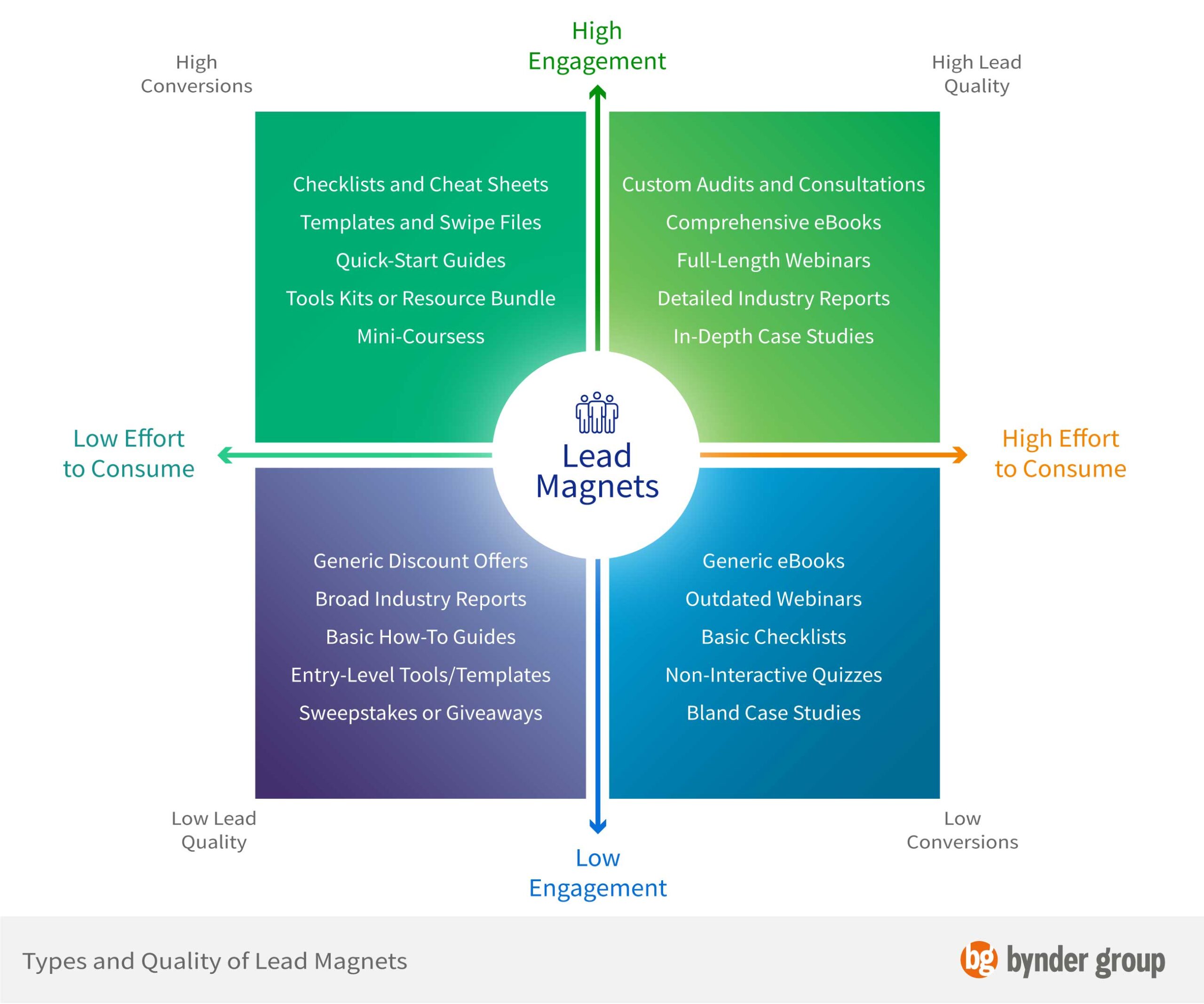
A lead magnet is a strategic tool designed to capture leads by offering valuable, in-depth content in exchange for a prospect’s contact information. These lead magnets often include ebooks, white papers, templates, and other downloadable resources.

A webinar is a powerful example of a lead magnet due to its interactive and educational nature. By hosting a webinar, your business can offer valuable insights, training, or discussions on relevant topics. Prospects register with their contact information to gain access, allowing you to capture leads efficiently and provide them with valuable content and information.

Lead Magnets Generate More Than Leads

In addition to being part of your marketing strategy, lead magnets are also a crucial component of a comprehensive demand generation strategy. They serve as the initial touchpoint that attracts potential customers into your marketing funnel by addressing their needs and interests. By offering valuable content or incentives, lead magnets help create awareness about your brand and its offerings. This early engagement is essential for building a relationship with prospects and nurturing them through the buyer’s journey.

Components of a High-Performing Lead Magnet

Focus on One Problem

Keep it simple and focus on helping your target audience solve a single problem. By addressing one pain point, you can provide a clear and concise solution that prospects can easily digest. This approach builds trust in your brand’s expertise and encourages further engagement.

Provide Value

Your lead magnet should offer valuable content that is not easily found elsewhere. It should be high-quality, actionable, and relevant to your target audience’s needs. This value exchange cultivates a positive brand experience right from the start and encourages prospects to continue engaging with your business.

Specific Call-to-Action (CTA)

A lead magnet should always include a specific call-to-action that directs prospects toward the next step in the sales funnel. Whether it’s signing up for a free consultation, scheduling a demo, or subscribing to your email list, the CTA should be clear and compelling.

Invest in Great Design

A well-designed and on-brand lead magnet creates a positive first impression on prospects, making them more likely to engage with your content. Quality design also amplifies the perceived value of your lead magnet and reflects positively on your brand’s professionalism.


Types and quality of lead magnets


Tips to Optimize Your Lead Magnets

Know Your Target Audience

To effectively use lead magnets, you must understand your target audience’s pain points, interests, and preferences. Investing in market research and creating detailed buyer personas will help you tailor your lead magnet to meet specific needs and attract the right prospects.

Use Personalization

Personalization is key in today’s digital landscape. With so much content available online, consumers crave personalized experiences that cater to their individual needs. By using data from your lead magnet’s registration form, you can personalize future communication and content to better resonate with prospects.

Promote Effectively

There are many channels to promote your lead magnet. Option channels include owned media, paid media, and earned media. Owned media include your website, blog, and social media platforms. Paid media encompasses advertising on Google or social media platforms. Earned media includes mentions in the press or influencer endorsements.

Owned Media

Using owned media like your website, blog, and social media channels is generally low-cost or free, allowing full control over content, timing, and frequency of promotions, ensuring brand consistency. However, the reach is limited to your existing audience, which may not be expansive, and regularly creating and updating content can be time-consuming and resource-intensive.

Paid Media

Paid media, such as Google ads and social media advertising, offers the advantage of expanded reach, precise targeting, and quick results. However, it comes with drawbacks like high costs, temporary impact requiring ongoing investment, and the risk of ad fatigue, where audiences become less responsive over time.

Earned Media

Earned media offers credibility through third-party validation from press mentions or influencer endorsements, enhancing trust with potential leads. It extends organic reach via shares and word-of-mouth and is cost-effective compared to paid promotions. However, it comes with challenges like lack of control over brand presentation, unpredictability in campaign success, and the time-consuming nature of building relationships with journalists and influencers.

Your Lead Magnet Worked… Now What?

After capturing leads with your lead magnets, nurturing them through email marketing is essential. By segmenting your email list according to the lead magnet they subscribed to, you can deliver targeted and personalized content that guides them further down the sales funnel. This process typically includes offering additional valuable content, creating personalized email sequences, and engaging timely to build trust and establish a strong relationship.

Improve Your Lead Generation with Lead Magnets

Lead magnets are a highly effective and cost-effective marketing tactic for prospect acquisition when implemented correctly. They provide value to both the business and prospects by fostering trust, building connections, and streamlining the sales funnel process.

By understanding your target audience and utilizing effective promotional channels, you can leverage lead magnets to attract and nurture high-quality leads that are likely to convert into loyal customers. So, it’s important to invest time and resources in creating high-quality lead magnets that align with your business goals and target audience needs.


Related Reading


Mastering Revenue Generation: Inbound Strategies to Attract, Convert, and Retain Customers

When it comes to business revenue generation, the mantra for success is no secret: attract, convert, and retain customers. These three key components of inbound marketing form the foundation of a robust revenue generation strategy. Yet, businesses often find success in one area while enduring a state of stagnation or decline in others. Identifying where you find success and identifying the gaps can form the foundation for sustainable growth and profitability.

Understanding the Customer Journey

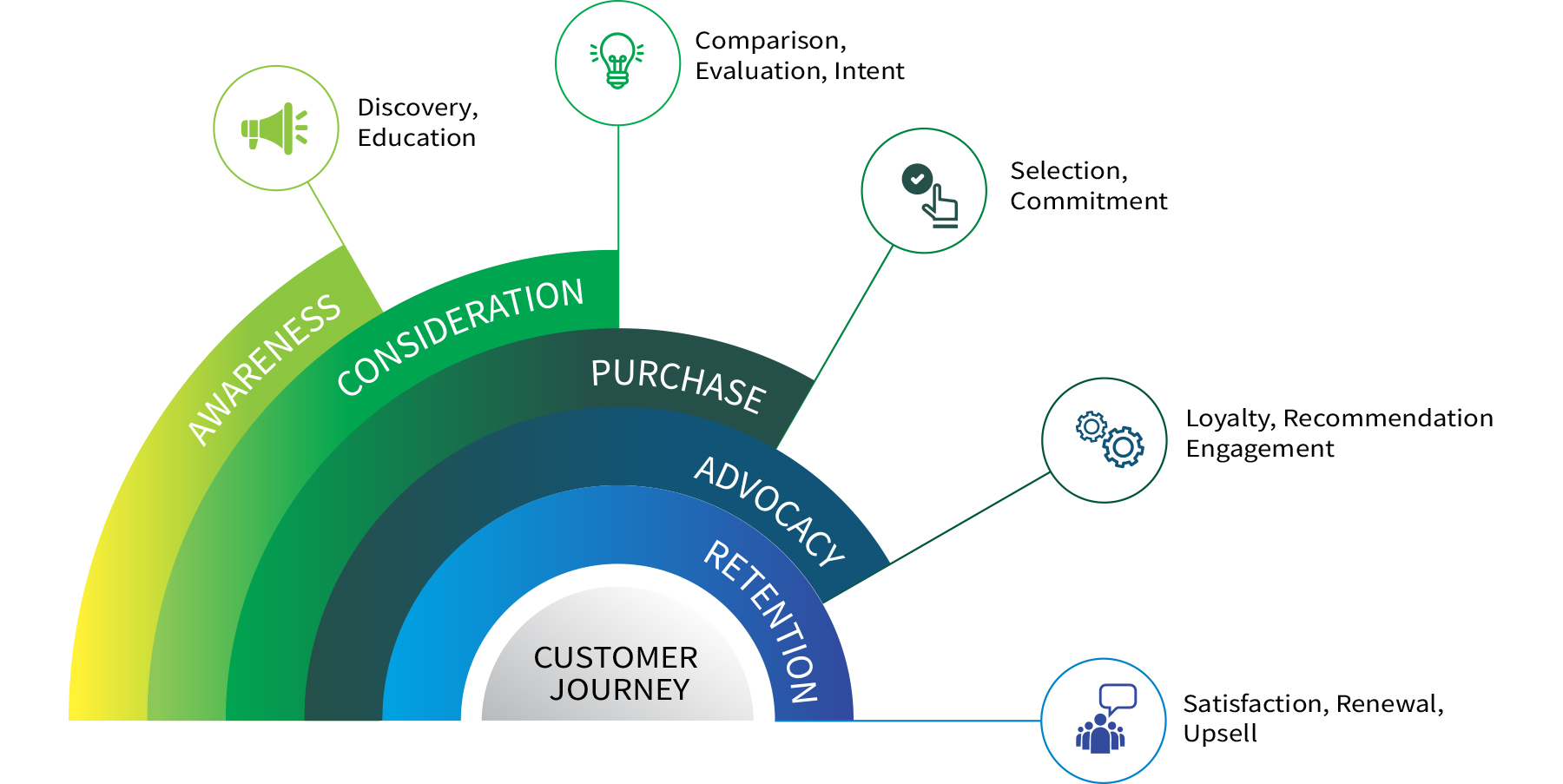
The customer journey is a roadmap detailing how a potential buyer evolves from being aware of your brand to becoming a loyal customer. This voyage aligns seamlessly with the three revenue generation buckets—each stage requiring a tailored strategy to move the customer down the sales funnel successfully.

1. Attracting Customers

Attracting customers is akin to making a first impression. You aim to captivate and entice them to learn more. This stage is all about visibility and engagement. Some proven methods for attracting customers include:

Content Marketing:

Create valuable content that addresses your target audience’s needs, questions, and pain points. Blogs, webinars, videos, and ebooks are effective tools to draw interest.

SEO

Optimize your content strategy so that it ranks higher in search engine results pages (SERPs), making it easier for potential customers to find you.

Social Media

Use social media platforms to reach and engage with your target audience. Regular posts, live sessions, and interactive content will increase brand awareness.

2. Converting Customers

Once you’ve attracted potential customers, the next step is to convert those leads into sales. This stage requires understanding the needs of your leads and providing them with a solution. Tactics for converting customers include:

Personalized Marketing

Tailor your messaging and offers based on the customer’s previous interactions with your brand. Personalization can significantly boost conversion rates.

Effective Sales Strategies

Focus on your customer’s needs, provide relevant information, and guide them through the purchasing process smoothly.

Streamlined Customer Experiences

Ensure that every touchpoint of your customer experience, from landing pages to checkout processes, is optimized for ease of use and efficiency.

3. Retaining Customers

Acquiring a new customer can be five times more expensive than retaining an existing one. Hence, customer retention is critical for long-term success. Effective strategies to keep customers returning include:

Customer Service Excellence

Providing easy access to swift and helpful customer service can turn a satisfied customer into a loyal advocate. Leverage AI, chatbots, and self-service portals to enhance the customer experience.

Personalized Engagement

Continue engaging with your customers through personalized emails, social media interactions, and tailored offers. Remember, engagement doesn’t end at the sale.

Knowledge Base for Self-Service

Empower your customers by providing a comprehensive knowledge base that includes FAQs, how-to guides, and troubleshooting information. This resource allows them to find answers quickly and efficiently, often improving satisfaction and fostering a sense of autonomy, contributing significantly to retention.

measuring success

Measuring Success

To understand where you excel and where you need to improve, it’s essential to measure your performance at each stage. KPIs to gauge success include:

  • Website traffic
  • Conversion rate
  • Customer acquisition cost
  • Retention rate
  • Customer lifetime value

Achieve Sustainable Revenue Generation

Attracting, converting, and retaining customers are three pillars of a successful business strategy. Excelling in all three is no small feat but understanding each stage of the customer journey and implementing targeted strategies can set your business on the path to revenue generation excellence. Ensure a balanced approach across all three to build a sustainable and profitable business.

Related Reading


The Indispensable Role of Strategic Marketing in B2B Success

Unlocking Sustainable Growth

Companies are constantly on the hunt for strategies that will grant them an upper hand. One fundamental aspect is the potential power of a marketing-focused growth strategy for B2B companies. This approach isn’t merely about promotional activities—it’s about embedding marketing at the very heart of your business’s strategic foundation.

Improve Alignment Between CEOs and Marketing

In a study by McKinsey & Company, it was discovered that the partnership between CEOs and CMOs, especially in how they collaboratively defined marketing’s role and influence in shaping growth strategies, significantly impacted their companies’ performance. The array of strategies, tactics, tools, and resources at the disposal of contemporary marketers has expanded exponentially, unlocking new possibilities for what marketing can accomplish. With this rapid change, it’s more and more challenging for CEOs to keep up. This is where a strong partnership with the marketing department becomes crucial.


Companies that include marketing at the core of their growth strategy outperform their competition and are twice as likely to see revenue growth of 5% or more than those that don’t.


Marketing at the Core of Growth Strategy

When CEOs and companies neglect marketing as a growth driver, their competitive edge diminishes significantly. In this recent article published by the Harvard Business Review, they state that companies that include marketing at the core of their growth strategy outperform their competition and are twice as likely to see revenue growth of 5% or more than those that don’t (67% to 33%). Additionally, they state that high-growth companies invest, on average, three times more in marketing. To harness the full potential of marketing for sustainable growth, it’s essential to strategize its integration as a core element of your business plan.

Improve Customer Experience (CX)

Marketing isn’t just a message; it’s a critical framework guiding product development, customer service, and sales alignment. With a marketing-first perspective, B2B companies prioritize customer experience in product/service development, creating offerings that resonate in the market. This approach helps companies anticipate market trends, analyze customer data, and outperform competitors.

Marketing Leads, Culture Follows

Marketing shapes company culture and boosts performance. An integrated strategy drives internal collaboration, innovation, and customer focus. Placing marketing at the heart of the organization fosters a shared mindset across all levels. This alignment ensures a motivated, customer-centric team. Embedding marketing in corporate culture leads to both external growth and internal strength through a driven and collaborative workforce.

marketing-focused growth strategy

Marketing Data as a Beacon for Sales Strategies

Integrating marketing data into sales strategies boosts efficiency and closing rates. Marketing data offers insights into customer preferences, behaviors, and engagement, enabling tailored approaches that enhance conversion rates and shorten sales cycles. Prioritizing leads based on engagement scores optimizes resource allocation. Aligning sales messaging with marketing campaigns ensures a consistent brand experience, fostering trust and loyalty.

The Symbiotic Relationship of CRM and Marketing-First Approach for Growth

An effective CRM system, paired with a marketing focus, forms a solid foundation for company growth. This integration boosts understanding of customer needs, behaviors, and preferences, enabling personalized experiences that enhance satisfaction and loyalty. The CRM acts as a central hub for customer data, supporting targeted marketing campaigns. A marketing-centric approach ensures that customer insights from the CRM are utilized across all business functions, aligning products and services with customer expectations for market success. CRM analytics monitor marketing effectiveness, drive improvements, and inform data-driven revenue decisions. Prioritizing customers in growth strategies strengthens relationships, fosters loyalty, and fuels sustainable growth. This is how businesses can leverage a CRM to find gold in their customer data.

Harnessing Strategic Marketing for Sustainable Business Growth

By centering their growth strategies around a comprehensive marketing philosophy, B2B companies can crystallize their brand messaging, refine their product and service offerings, and ultimately secure a competitive advantage in their respective industries.

Bynder Group works closely with CEOs and CMOs to develop and execute marketing-focused growth strategies that accelerate business growth. We also fill the gap as a fractional CMO when one is not in place. We champion the integration of strategic marketing techniques as a keystone for business growth. Our expertise in crafting tailored strategies ensures that your B2B brand doesn’t just participate in the market—it leads it.

Related Reading