Your marketing content isn’t working the way it used to. Years of AI-generated marketing slop have eroded the trust buyers once had in the companies they do business with.
Traffic might look OK. Open rates may be holding steady. But the space is getting very noisy. Is your marketing even getting heard above the cacophony?
Quick answer: Search is splitting into three separate competitions: traditional SEO, Answer Engine Optimization, and Generative Engine Optimization, and most B2B content is only built for the first one. Buyers also fact-check almost everything AI tells them, and discount anything that traces back to a vendor talking about itself. The fix isn’t more content. It’s content built to name specific numbers, sources, and third-party proof so it survives a skeptical buyer’s fact-check, and structured so AI systems can cite it accurately.
The Space Got Loud, and Trust Has Eroded
AI is now standard equipment in B2B content production. 95% of B2B marketers use it somewhere in their content workflow, according to the Content Marketing Institute’s 2026 research. Buyers can no longer tell AI-written copy from human-written copy, so they’ve stopped trying and started distrusting both.
This is the real cause of the plateau you’re seeing. Inbound marketing’s original premise was simple: helpful content earns trust, and trust earns pipeline. That concept paid off when helpful content was scarce. It isn’t scarce anymore. It’s everywhere, and most of it looks, sounds, and reads the same.
SEO Stopped Being the Only Game
51% of B2B software buyers now start their research more often in an AI chatbot than in Google, up from 29% less than a year earlier, according to G2’s 2026 Answer Economy report. Ask ChatGPT or Perplexity a buying question, and it synthesizes an answer on the spot. The buyer may never click through at all, and if they do, it’s often later in the funnel than it used to be. AI is absorbing the early research clicks; what reaches your site increasingly skews toward buyers who are closer to a decision.
This isn’t the classic SEO game with a new name. We now have multiple measurement channels running simultaneously:
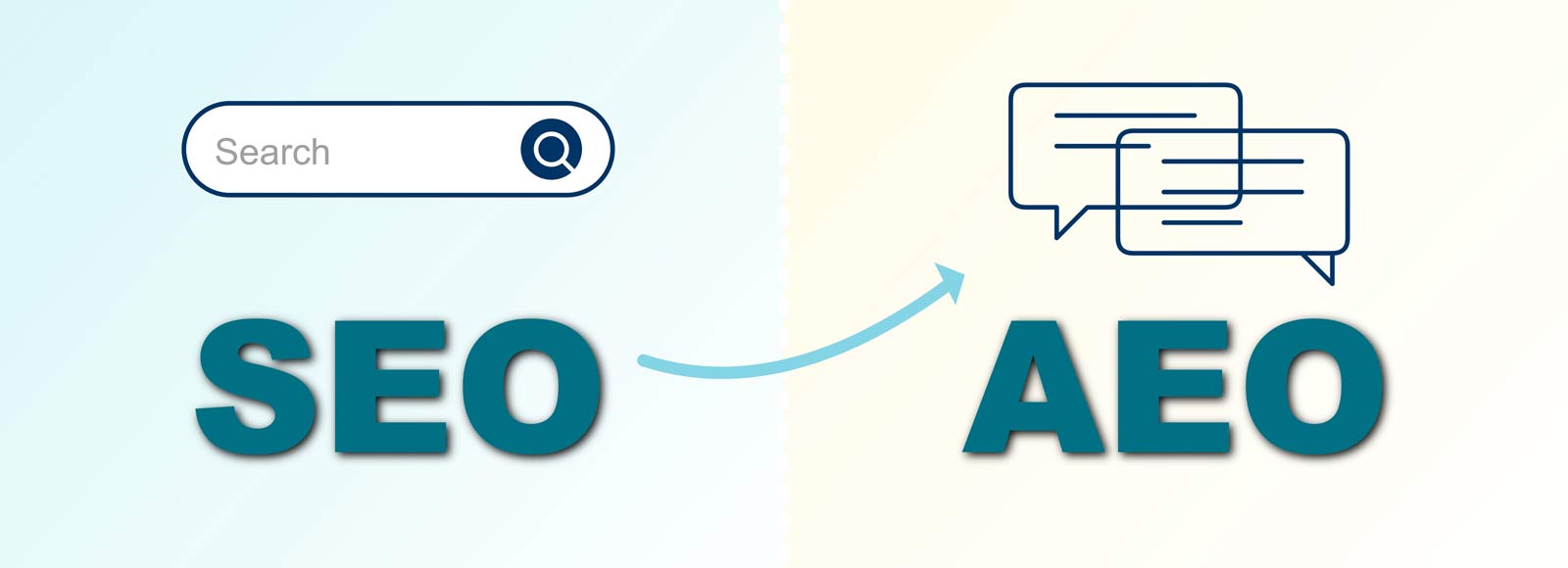
- SEO competes for a ranking position.
- Answer Engine Optimization (AEO) competes for the single answer slot inside an AI response.
- Generative Engine Optimization (GEO) competes for a place in the pool of sources an AI cites while building that answer.
Three different games, three different scoreboards, and most B2B content teams are still only playing the first one.
Trust Is the New Bottleneck, and Here Is the Real Data That Shows It
Buyers have stopped blindly trusting the research they do in AI. According to TrustRadius’s 2026 B2B Buying Disconnect Report, a survey of 1,862 buyers and 444 vendors, 94% of B2B buyers who use AI to research a purchase fact-check what it tells them, and 47% say they trust online content less than they did a year ago, up from 39% the year before. In the same report’s ranking of the resources buyers consult most, vendor-published content comes in last.
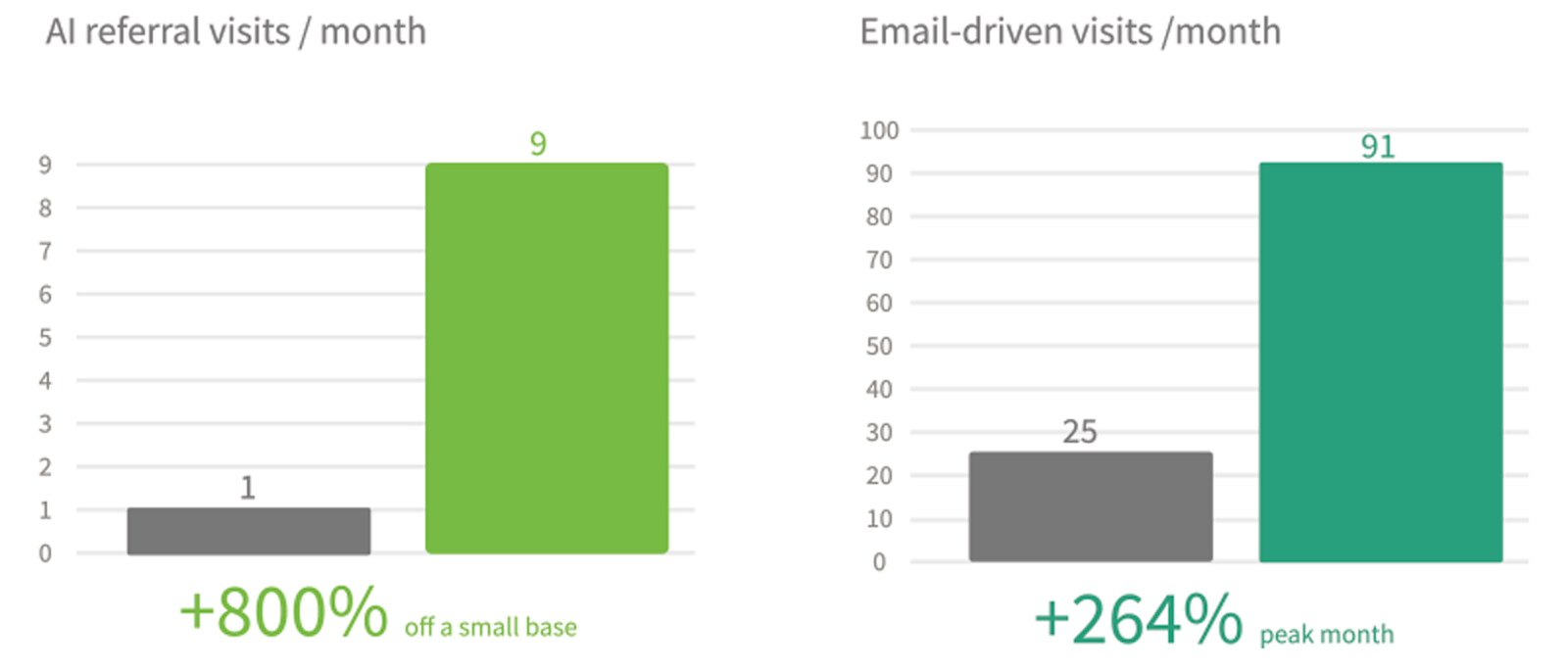
We watched this shift play out with real numbers this year, working with a B2B client in a physical-goods industry. Between January and July, blog visits arriving from AI referral sources grew from 1 to 9 a month, an 800% increase off a small base. It’s still a sliver of total traffic. But it’s the fastest-growing channel this client has, and it’s growing for the reason the industry data predicts: AI systems are starting to cite them as a source, not just crawl them as a page.
The bigger signal showed up in a channel most teams stop watching once it’s “working”: email. Email-driven blog visits for this client grew 264% between January and July and ended the period ahead of social, referral, and AI traffic combined. That’s not about gaining a new audience. It’s about trust in their brand. Every one of those visits came from someone who had already opted in, someone who trusted the sender before they ever clicked.
Organic and direct traffic still made up the majority of this client’s blog visits this year, and that’s worth stating plainly instead of explaining away: brand equity still works. But it mostly works on people who already know your name. It says very little about whether you’re reaching the buyer who doesn’t know you exist yet, which is exactly the moment AEO and GEO are built to win.
Five Shifts to Make Before Your Next Content Strategy Review
Marketing content is still valuable, maybe more than ever. But it’s no longer enough to write for people and optimize for SEO alone. AI retrieval systems parse a page the way a skeptical buyer does: looking for a clear, named claim, not a slow build-up, and looking for evidence that traces back to somewhere other than the vendor talking about itself. This matters because buyers discount an AI answer the moment they trace its source back to vendor-controlled content alone, and vendor-published material already ranks dead last among the sources they say they trust. Content built to be cited has to assume that trace-back will happen.
- Write for verification, not volume. Write for clarity and prioritize content that names a number, a mechanism, or a named example. AI systems and skeptical buyers discount vague claims the same way: they skip past them.
- Structure content to be quoted. Put a direct, plain-language answer in the first sentence or two of a section, not the last. Name the specific entity, the client, the metric, the source, instead of writing around it. That’s the passage most likely to get lifted into an AI-generated response.
- Pair every claim with proof that isn’t you. A number you publish about yourself reads as marketing copy. The same number, sourced to an independent report or attributed to a named client, reads as evidence. Build content around what can be verified outside your own site, not just what you assert on it.
- Feed your nurture stream before you feed the algorithm. This client’s numbers make the case on their own: a smaller, trusted list outperformed a wider, cold one. Segment by persona and customer journey stage, and distribute the content via your email marketing platform.
- Design your site for the buyer who’s already arrived at a decision, not the one still browsing. AI is absorbing the early, informational clicks. The traffic that still reaches your site skews toward people closer to buying, so the page they land on should assume that, with pricing, proof, and next steps close at hand instead of another layer of introductory content.
The Playbook Didn’t Break. The Old Scoreboard Did.
None of this means marketing is dead. In fact, that’s far from the truth. It means stop measuring the effectiveness of your marketing against a scoreboard that stopped counting the way you think it does. The teams pulling ahead right now aren’t producing more content than everyone else. They’re producing content built to survive being checked.