
Signal to Noise: How B2B Marketing Stands Out in a Loud World.

Your marketing content isn’t working the way it used to. Years of AI-generated marketing slop have eroded the trust buyers once had in the companies they do business with.

Traffic might look OK. Open rates may be holding steady. But the space is getting very noisy. Is your marketing even getting heard above the cacophony?

Quick answer: Search is splitting into three separate competitions: traditional SEO, Answer Engine Optimization, and Generative Engine Optimization, and most B2B content is only built for the first one. Buyers also fact-check almost everything AI tells them, and discount anything that traces back to a vendor talking about itself. The fix isn’t more content. It’s content built to name specific numbers, sources, and third-party proof so it survives a skeptical buyer’s fact-check, and structured so AI systems can cite it accurately.

The Space Got Loud, and Trust Has Eroded

AI is now standard equipment in B2B content production. 95% of B2B marketers use it somewhere in their content workflow, according to the Content Marketing Institute’s 2026 research. Buyers can no longer tell AI-written copy from human-written copy, so they’ve stopped trying and started distrusting both.

This is the real cause of the plateau you’re seeing. Inbound marketing’s original premise was simple: helpful content earns trust, and trust earns pipeline. That concept paid off when helpful content was scarce. It isn’t scarce anymore. It’s everywhere, and most of it looks, sounds, and reads the same.

SEO Stopped Being the Only Game

51% of B2B software buyers now start their research more often in an AI chatbot than in Google, up from 29% less than a year earlier, according to G2’s 2026 Answer Economy report. Ask ChatGPT or Perplexity a buying question, and it synthesizes an answer on the spot. The buyer may never click through at all, and if they do, it’s often later in the funnel than it used to be. AI is absorbing the early research clicks; what reaches your site increasingly skews toward buyers who are closer to a decision.

This isn’t the classic SEO game with a new name. We now have multiple measurement channels running simultaneously:

  • SEO competes for a ranking position.
  • Answer Engine Optimization (AEO) competes for the single answer slot inside an AI response.
  • Generative Engine Optimization (GEO) competes for a place in the pool of sources an AI cites while building that answer.

Three different games, three different scoreboards, and most B2B content teams are still only playing the first one.
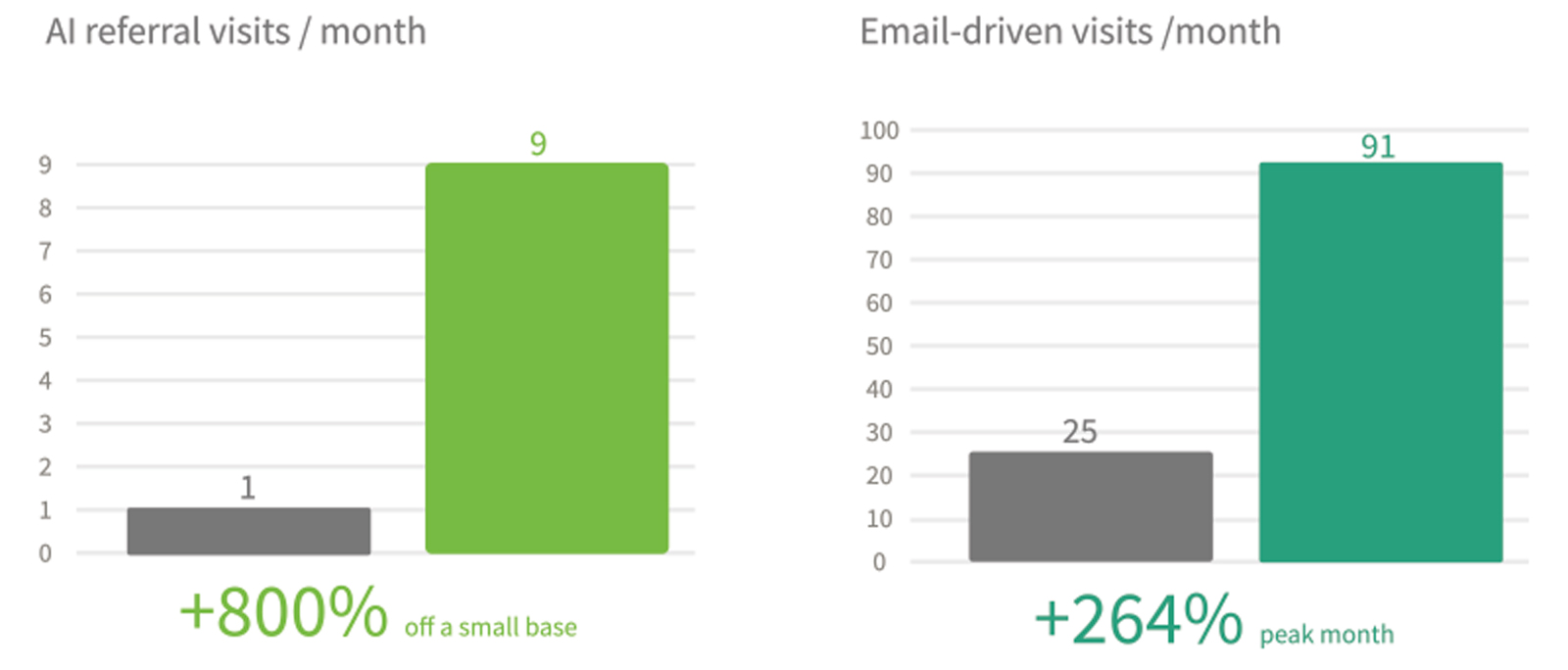
Bar chart showing a B2B client's fastest-growing traffic channels from January to July: AI referral visits grew from 1 to 9 per month, an 800% increase, and email-driven blog visits grew from 25 to 91 per month, a 264% increase.

Trust Is the New Bottleneck, and Here Is the Real Data That Shows It

Buyers have stopped blindly trusting the research they do in AI. According to TrustRadius’s 2026 B2B Buying Disconnect Report, a survey of 1,862 buyers and 444 vendors, 94% of B2B buyers who use AI to research a purchase fact-check what it tells them, and 47% say they trust online content less than they did a year ago, up from 39% the year before. In the same report’s ranking of the resources buyers consult most, vendor-published content comes in last.

We watched this shift play out with real numbers this year, working with a B2B client in a physical-goods industry. Between January and July, blog visits arriving from AI referral sources grew from 1 to 9 a month, an 800% increase off a small base. It’s still a sliver of total traffic. But it’s the fastest-growing channel this client has, and it’s growing for the reason the industry data predicts: AI systems are starting to cite them as a source, not just crawl them as a page.

The bigger signal showed up in a channel most teams stop watching once it’s “working”: email. Email-driven blog visits for this client grew 264% between January and July and ended the period ahead of social, referral, and AI traffic combined. That’s not about gaining a new audience. It’s about trust in their brand. Every one of those visits came from someone who had already opted in, someone who trusted the sender before they ever clicked.

Organic and direct traffic still made up the majority of this client’s blog visits this year, and that’s worth stating plainly instead of explaining away: brand equity still works. But it mostly works on people who already know your name. It says very little about whether you’re reaching the buyer who doesn’t know you exist yet, which is exactly the moment AEO and GEO are built to win.

Five Shifts to Make Before Your Next Content Strategy Review

Marketing content is still valuable, maybe more than ever. But it’s no longer enough to write for people and optimize for SEO alone. AI retrieval systems parse a page the way a skeptical buyer does: looking for a clear, named claim, not a slow build-up, and looking for evidence that traces back to somewhere other than the vendor talking about itself. This matters because buyers discount an AI answer the moment they trace its source back to vendor-controlled content alone, and vendor-published material already ranks dead last among the sources they say they trust. Content built to be cited has to assume that trace-back will happen.

  1. Write for verification, not volume. Write for clarity and prioritize content that names a number, a mechanism, or a named example. AI systems and skeptical buyers discount vague claims the same way: they skip past them.
  2. Structure content to be quoted. Put a direct, plain-language answer in the first sentence or two of a section, not the last. Name the specific entity, the client, the metric, the source, instead of writing around it. That’s the passage most likely to get lifted into an AI-generated response.
  3. Pair every claim with proof that isn’t you. A number you publish about yourself reads as marketing copy. The same number, sourced to an independent report or attributed to a named client, reads as evidence. Build content around what can be verified outside your own site, not just what you assert on it.
  4. Feed your nurture stream before you feed the algorithm. This client’s numbers make the case on their own: a smaller, trusted list outperformed a wider, cold one. Segment by persona and customer journey stage, and distribute the content via your email marketing platform.
  5. Design your site for the buyer who’s already arrived at a decision, not the one still browsing. AI is absorbing the early, informational clicks. The traffic that still reaches your site skews toward people closer to buying, so the page they land on should assume that, with pricing, proof, and next steps close at hand instead of another layer of introductory content.

The Playbook Didn’t Break. The Old Scoreboard Did.

None of this means marketing is dead. In fact, that’s far from the truth. It means stop measuring the effectiveness of your marketing against a scoreboard that stopped counting the way you think it does. The teams pulling ahead right now aren’t producing more content than everyone else. They’re producing content built to survive being checked.
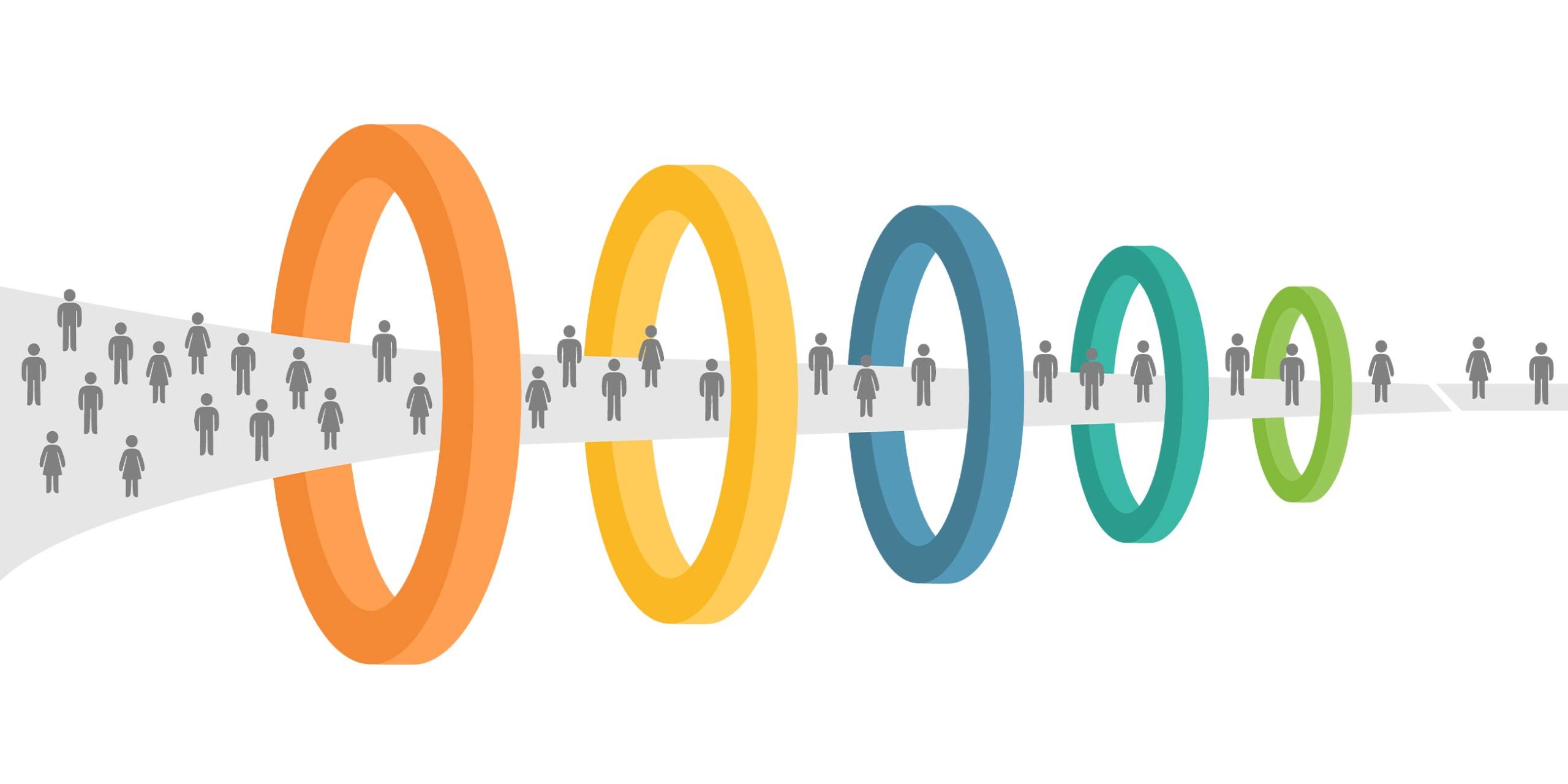

Demand Generation and Lead Generation for B2B Marketing

Demand Generation and Lead Generation: A Symbiotic Relationship for Success

Both demand generation and lead generation are critical for a successful B2B marketing strategy, but they serve different purposes and require distinct approaches.

Demand generation is a holistic marketing approach to create awareness and interest in a company’s products or services. This is accomplished through a variety of tactics, including content marketing, events, and social media campaigns. The goal is to attract potential customers, build relationships, and increase brand awareness, ultimately creating demand for their products or services.

Lead generation is a subset of demand generation, focused on capturing interest in a product or service to develop a sales pipeline. Tactics often include lead-capturing activities like form fill-outs, subscriptions, or registrations. Here, the goal is to convert an interested potential buyer into a lead, who can then be nurtured through the sales process.

In essence, demand generation creates a desire for your products or services, and lead generation capitalizes on this interest by converting prospects into leads for your sales team. The two strategies work hand in hand, establishing a strong foundation for a successful sales and marketing funnel.

Demand Generation

Demand generation is invaluable for businesses because it increases brand visibility while also stimulating interest in products or services. It initiates the customer’s journey, drawing them into the marketing funnel and paving the way for lead generation and conversion. Demand generation helps companies stand out in a crowded market, fostering consumer trust and loyalty through consistent and impactful interactions.

As noted by Gartner, an industry leader in digital market insights, a well-executed B2B demand generation strategy can drive the creation of sales-ready leads and accelerate revenue growth, thereby demonstrating its significant contribution to a company’s success.

How Demand Generation Improves Valuable Organic Traffic

Demand generation can significantly affect organic traffic, driving more visitors to your website through non-paid search results. A well-thought-out demand generation strategy can boost your organic ranking on search engines by improving your website’s credibility and relevance.

Content plays a critical role in this process. High-quality, valuable content tailored to the needs of your audience is more likely to be shared, increasing your website’s visibility and opportunities for backlinks — two factors that search engines consider when ranking websites.

Furthermore, another aspect of demand generation — SEO (Search Engine Optimization) — directly contributes to improving your organic ranking. By optimizing your content with relevant keywords and phrases that your target audience is likely to search for, you not only make your content more discoverable but also increase the chances of attracting more qualified prospects.

In essence, effective demand generation strategies can enhance your organic traffic by making your website more visible and relevant to your target audience — a critical aspect of expanding your reach and ultimately converting prospects into leads.

Remember that demand generation is a long-term strategy, not a one-time campaign. It requires consistent effort and adjustment over time to adapt to changes in market conditions and your audience’s evolving needs.

Examples of Demand Generation Tactics

  1. Content Marketing: Producing high-quality, relevant content is a powerful way to attract potential customers. This can range from blog posts, whitepapers, and eBooks, to webinars and podcasts. Content marketing positions your company as an industry leader while simultaneously addressing your target audience’s pain points and needs.
  2. Email Marketing: Personalized email campaigns targeting segmented market lists can effectively keep potential customers engaged and nurture their interest in the company’s products or services. An effective email marketing strategy helps maintain top-of-mind awareness among potential buyers and encourages them to take the next step in their buyer’s journey.
  3. Social Media Campaigns: By leveraging the power of social media platforms, businesses can amplify their reach and engage with a wider audience. Regular posting of engaging content, coupled with paid advertisements targeted towards a specific demographic, can stimulate interest and create a buzz around the company’s offerings.

Lead Generation

The primary objective of lead generation is to convert interested potential buyers into leads, who can then be nurtured through the sales process. According to HubSpot’s 2023 Marketing Strategy & Trends Report, lead generation is the 3rd most important metric used when measuring the effectiveness of content marketing strategies.

In digital marketing, the process usually begins when a visitor clicks on a call-to-action (CTA) on either owned or paid media. This CTA leads them to a landing page, which includes a form used to collect the visitor’s information. Once the visitor fills out and submits the form, they are then led to a thank you page.

As with demand generation, lead generation should be thought of as a long-term and continuous process. Regular evaluation and adjustment of your lead generation strategies are necessary to keep up with evolving consumer behaviors and market trends. Remember that the more effectively you can attract targeted leads, the higher the chance of converting them into paying customers.

Successful Lead Generation Starts with Pipeline Generation

Creating a robust lead generation strategy requires systematic planning and implementation. Pipeline generation plays a vital role in bolstering lead generation efforts. It refers to the process of identifying and qualifying prospects that could potentially become leads. This proactive approach helps to streamline lead generation, as it ensures that only high-quality, relevant prospects are targeted, thereby increasing the conversion rate.

Furthermore, it facilitates nurturing strategies, as you can create personalized content based on the specific needs and interests of the prospects in your pipeline. In essence, a robust pipeline generation strategy can significantly enhance the effectiveness and efficiency of your lead generation, ultimately driving more revenue for your business.

Examples of Lead Generation Tactics

  1. Webinars: Hosting interactive webinars is a great way to generate leads. These online seminars offer valuable insights on industry-related topics. Attendees usually sign up in advance, providing their contact information, which makes webinars an excellent tool for collecting high-quality leads.
  2. SEO: By optimizing your website and content for search engines, you can attract more visitors. Using keywords that your target audience is searching for can help increase visibility. Visitors who find your content valuable might be willing to provide their contact information, and hence, can be converted into leads.
  3. Lead Magnets: Offering lead magnets like eBooks, free trials, or software downloads can be an effective lead generation tactic. In exchange for the free resource, potential customers provide their contact information, which can be used for further engagement and lead nurturing.

Key Takeaways for Effective Demand Generation and Lead Generation

Demand and lead generation are critical components of an effective marketing strategy. They involve meticulous planning, execution, and evaluation to ensure you’re reaching the right audience with the right message at the right time. Remember that these strategies are not static, and require continuous optimization based on market trends and customer behavior. By leveraging tools and tactics such as content marketing, social media campaigns, email marketing, webinars, and SEO, you can effectively generate demand, attract high-quality leads, and ultimately drive growth for your business.

Related Reading